
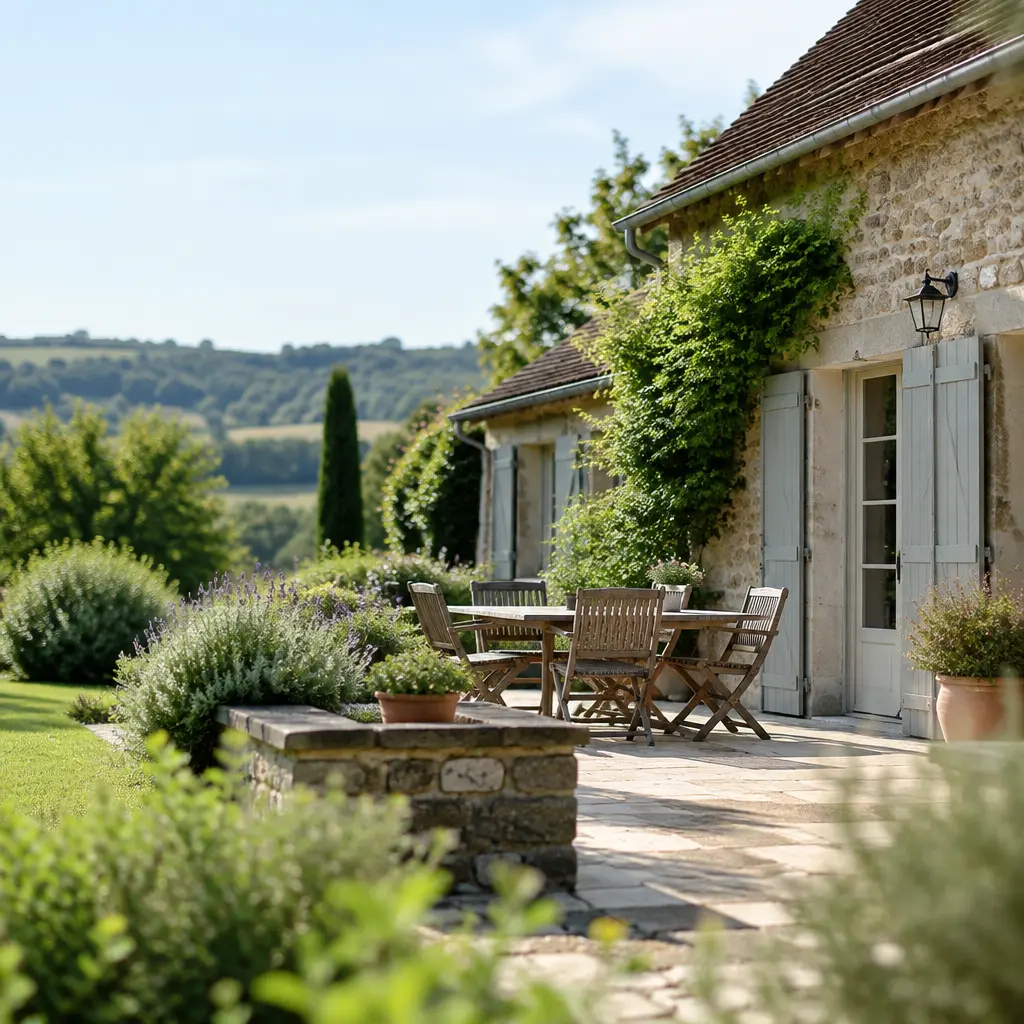
Every year, the Costa Blanca attracts thousands of buyers from abroad looking for sunshine, space and authenticity. While seafront apartments often get all the attention, country houses — fincas, rural villas, cortijos — are a serious and often underestimated alternative. Generous plots, complete peace and quiet, prices more affordable than on the coast: the rural market of the province of Alicante holds some fine opportunities, but also administrative pitfalls that only local, on-the-ground knowledge can help you avoid.
Why choose a country house on the Costa Blanca?
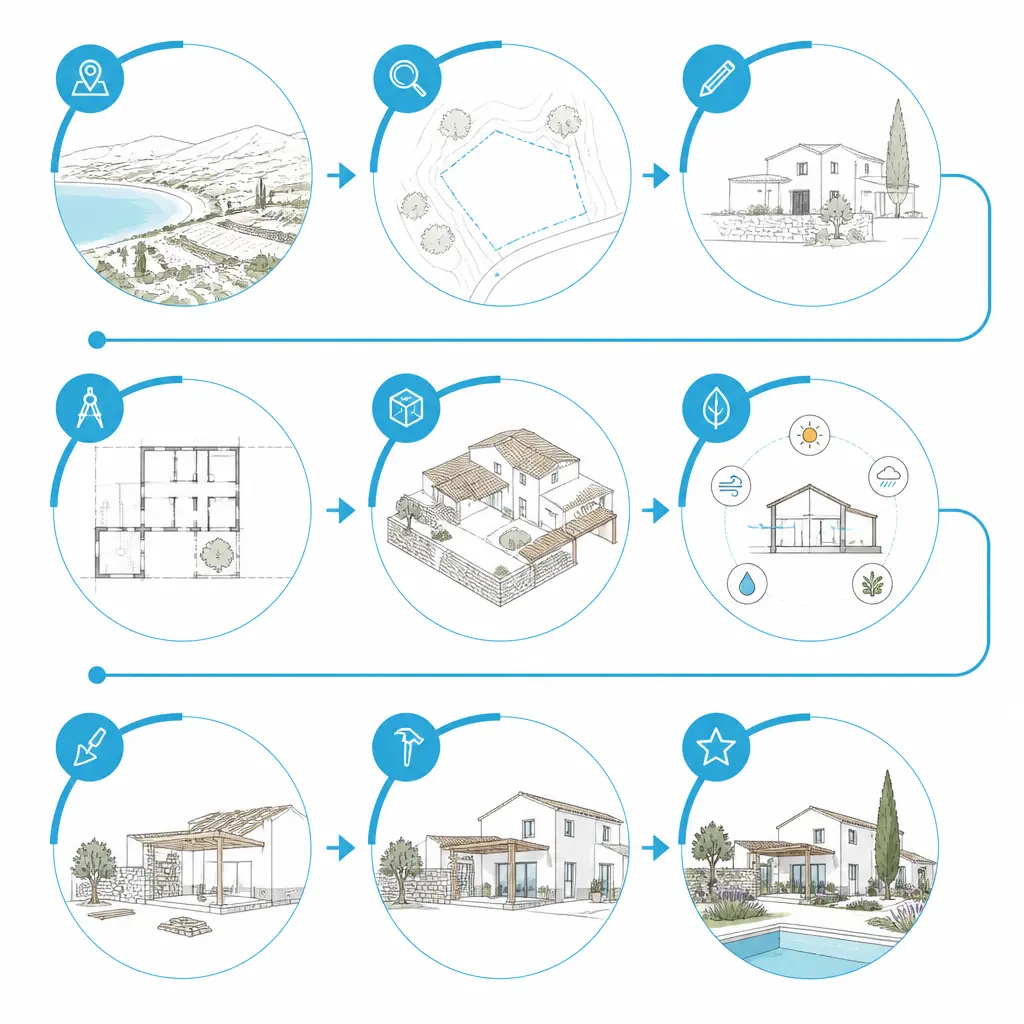
A rural property offers what the seafront cannot always guarantee: space. A 200 m² finca on a one-hectare plot in Algorfa or in the Jalón Valley will cost you significantly less than a new 90 m² sea-view apartment in Torrevieja. The Costa Blanca hinterland, between the hills of Benissa, the plains of Heredades and the almond orchards of San Miguel de Salinas, is a way of life in its own right — not a compromise.
The Belgian, French and Swiss buyers who take the plunge all have one thing in common: they wanted a life project, not a passive investment property. A country house meets exactly that expectation.
- Prices per m² generally lower than directly on the coast
- Land often included (from 1,000 m² to several hectares)
- Peace, privacy and open views with no adjoining neighbours
- Room for a pool, a vegetable garden, olive trees or vines
- Quick access to the sea (15 to 40 minutes depending on the area)
- Preserved Spanish authenticity in villages such as Benissa, Pedreguer or Algorfa
The best areas for a finca or rural villa
The Costa Blanca is split into two distinct markets, separated by Benidorm. The north and the south do not attract the same buyer profiles, nor do they have the same price levels.
Northern Costa Blanca (Altea, Calpe, Javea, Moraira hinterland): mountain landscapes and pine forests, close to the Mediterranean Sea and to a high-end international clientele. A 250 m² rural villa with land sells for between €450,000 and €900,000. As a guide, average asking prices are around €3,600/m² in Altea and Calpe and €4,100/m² in Jávea (idealista, mid-2026), with wide variations depending on orientation and finishes.
Jalón Valley (Jalon Valley) and inland Benissa: an intermediate area very popular with Dutch and Belgian buyers. Vineyards, orange groves, slightly milder summer temperatures. Average budget: €250,000 to €500,000 for a finca with character.
Southern Costa Blanca (Orihuela Costa, Torrevieja, San Miguel de Salinas, Heredades, Algorfa): flat land, agricultural plains, a very sunny climate (about 320 days a year without significant rain). This is where your budget goes furthest: a 150 to 200 m² rural villa with a 2,000 m² plot can be found for between €180,000 and €320,000. Prices per m² are on average lower than in the north: ask us for current examples.
What budget should you plan to buy a country house on the Costa Blanca?
Allow between €180,000 and €600,000 depending on the area, the size and the condition of the property. On top of this purchase price, add, for a resale property in the Valencian Community, about 10.5 to 11.5% in purchase costs: ITP (property transfer tax, 9%), notary fees, registration fees and gestoría. A lawyer, which we recommend, usually charges about 1% + VAT on top. A property listed at €250,000 will therefore cost you about €276,000 to €279,000, excluding the lawyer.
What are the best areas to find a country house on the Costa Blanca?
Algorfa / Heredades: tight budgets, agricultural plains, 20 min from Torrevieja. Jalón Valley: vineyard landscapes, halfway between sea and mountains. Inland Benissa: high quality of life, international clientele. San Miguel de Salinas: maximum sunshine, affordable prices, close to Alicante airport.
The key steps to buying a rural property in Spain
Buying in Spain from abroad follows a well-defined process, as long as you do not skip any steps. See our complete guide to buying in Spain for a detailed overview. Here are the main steps for a rural property:
- Obtain your NIE (Número de Identidad de Extranjero): mandatory for any property purchase in Spain. You can apply by appointment at a Spanish consulate in your country or, in Spain, at a Policía Nacional office (form EX-15, fee €9.84).
- Open a Spanish bank account: needed for payments related to the purchase, running costs and any mortgage.
- Make an offer: your Maison Costa Blanca adviser assists you in negotiating the price and conditions.
- Sign the contrato de arras (deposit contract): you generally pay 10% of the price to reserve the property. This contract binds both parties.
- Land registry and planning checks: a critical step for a rural property. You must check that the property is correctly recorded in the land registry (cadastre), that the land is not in a protected area (zona no urbanizable de especial protección) and that there are no illegal buildings that cannot be legalised. An independent lawyer is essential here.
- Signing at the notary (escritura pública): official transfer of ownership in the presence of the Spanish notary.
- Registration at the Property Registry: the final step that makes your purchase legally official.
The independent lawyer — separate from the estate agent — plays a central role: they check that there are no debts, mortgages or charges attached to the property, and make sure that all buildings on the land are legal.
What are the costs of buying property in Spain for a non-resident?
ITP (Impuesto de Transmisiones Patrimoniales) is 9% of the price for a resale property in the Valencian Community (deeds signed from 1 June 2026; 11% above €1,000,000). Notary fees follow an official tariff: allow about €700 to €1,000 for a purchase of around €250,000, registry fees about €400 to €700, and lawyer’s fees (optional) about 1% + VAT. Agency fees are generally included in the seller’s price.
How can you secure the purchase of a rural property in Spain from abroad?
You can act remotely thanks to a notarised power of attorney (poder notarial), which authorises a trusted third party to sign on your behalf. The independent local lawyer we recommend checks charges, debts and planning compliance. Never sign a deposit contract without having received a full legal report.
What Maison Costa Blanca does differently
Maison Costa Blanca is not an aggregator portal platform. It is an on-the-ground agency, working with Costa Blanca Sales, based in Villamartin since 2000. Discover our team and our approach to understand what sets us apart.
Our advisers know first-hand the country roads between Algorfa and Heredades, the planning constraints on fincas in the Jalón Valley, and the subtleties of the Spanish land registry for rural plots. They speak French, Dutch, English and Spanish.
From the property search to the handover of the keys, you have a single point of contact, in English, French, Dutch or Spanish. No hidden commission. If you would like to start your project, contact our advisers for an initial, no-obligation conversation.
- The budget for a country house on the Costa Blanca starts at around €180,000 in the south (Algorfa, San Miguel) and exceeds €450,000 in the north (Javea, Calpe).
- For a resale in the Valencian Community, purchase costs amount to about 10.5 to 11.5% of the price (9% ITP, notary, registry, gestoría), plus the lawyer.
- Planning and land registry checks are essential before any rural purchase: illegal buildings and protected areas are real risks.
- The NIE, a Spanish bank account and an independent lawyer are three non-negotiable prerequisites.
- A notarised power of attorney lets you complete the purchase from abroad without travelling for every step.
Buying a country house on the Costa Blanca is a realistic, structured project, provided you have the right support. The Spanish rural market still offers real opportunities in 2026, but the administrative pitfalls — planning, land registry, hidden debts — are real and specific to rural properties. With the right partners at your side, you can turn this project into reality with peace of mind. Read our complete guide to buying in Spain or talk to an expert from our team today.
🧠 Quiz: test your knowledge
True or false: the costs of buying a property in Spain (ITP, notary, registry, gestoría) generally amount to about 10.5 to 11.5% of the purchase price for a non-resident buying a resale property in the Valencian Community?
See the answer
True. ITP is 9% since 1 June 2026 (11% above €1,000,000), plus notary and registry fees, which follow official tariffs, and the gestoría: about 1.5 to 2.5% more. A lawyer is optional and usually charges about 1% + VAT.
Related articles
- Apartments on the Costa Blanca: the complete guide to buying in 2026
- Villa in Spain on the Costa Blanca: the complete guide to buying in 2026
- Luxury property on the Costa Blanca: areas, price per m² and buying guide for non-residents
- Residential golf on the Costa Blanca: find your ideal home on Spain’s finest golf courses