Owning a house in Spain, and more specifically on the beautiful Costa Blanca, is the dream of many buyers from abroad looking for sunshine, beaches and a unique way of life. But before taking the plunge, it is important to plan your overall budget carefully: what is the real cost of buying property in Spain? Which purchase costs should you expect? Behind the advertised price lie property taxes, notary fees and various additional costs that vary from region to region. To help your project succeed, let us review together how to estimate the purchase price, the different mandatory expenses, and how an English-speaking agency can secure every step of your investment.
Learn which fouten vermijden bij aankoop to ensure a smooth purchase process.
Why choose the Costa Blanca to buy property in Spain?
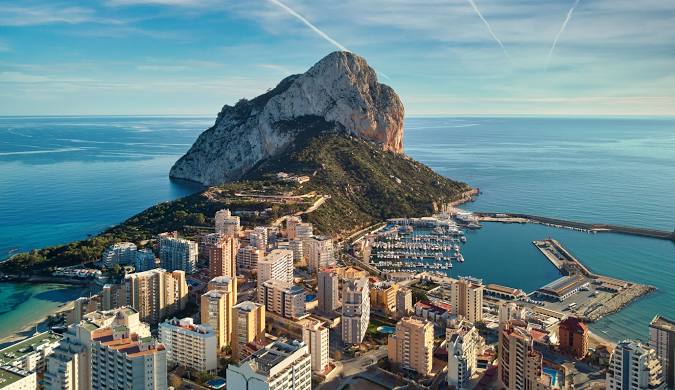
The Costa Blanca appeals with its mild climate all year round and its picturesque landscapes between the Mediterranean Sea and the mountains. Towns such as Alicante or Dénia offer a remarkable quality of life, just a few hours away from Belgium and much of Europe. The region attracts strong international demand, an asset for your property investment over the years, although no increase in value is guaranteed.
To explore every step and opportunity of this project, see our complete buying guide for the Costa Blanca.
If you are specifically considering a buy-to-let investment or a second home, our complete guide to apartments on the Costa Blanca details the best areas and buying strategies for 2026.
Compared with other Spanish areas, the Costa Blanca still offers attractive property prices while providing modern infrastructure. Its market offers a wide choice of houses and apartments suited both to permanent residents and to owners who wish to rent out their property seasonally. This competitiveness attracts retirees and families as well as investors looking for attractive rental yields.
To understand current market dynamics and identify the best opportunities by area, consult our detailed guide on immobilier Costa Blanca with pricing by zone and a complete purchase plan.
What are the main costs to expect when buying property?
Many buyers underestimate the purchase costs when budgeting for their future Spanish home. A realistic estimate of the total purchase cost includes several unavoidable items: property taxes, transfer tax, Spanish VAT (depending on the type of property), notary fees and various additional costs. Here is how to find your way through this sometimes complex property taxation, in particular by reviewing the mistakes to avoid regarding costs.
The purchase price quoted by the seller never reflects the full amount you will actually spend. Taking the time to anticipate these costs avoids unpleasant surprises and helps keep your project viable. Professional support, in particular from a specialised English-speaking agency, greatly simplifies the administrative and budget follow-up and also helps you better understand the NIE and the tax formalities.
Notary fees in Spain
The deed of purchase requires the involvement of a Spanish notary, whose role differs slightly from that of notaries in other countries such as Belgium. The amount of the notary’s fees depends on the value of the property and follows an official sliding scale (RD 1426/1989) rather than a percentage: for a purchase of about €250,000, expect generally €700 to €1,000 in total (indicative, 2026), and to prepare your property project with peace of mind it can be wise to consult a guide to plan your purchase step by step.
On top of this come the costs of officially registering the deed with the land registry. These formalities, essential to secure the transaction legally, generally represent an additional €400 to €700 for a property of about €250,000 (indicative). All of these notary costs must be paid on the day the deed is signed.
Property taxes and transfer tax
Every property purchase in Spain involves paying specific taxes depending on the type of property: resale or new build. For an existing home, the main tax is called transfer tax (“Impuesto sobre Transmisiones Patrimoniales”, or ITP). It varies according to the autonomous community: 9% in the province of Alicante, the heart of the Costa Blanca, for deeds signed from 1 June 2026 (10% before; 11% above €1,000,000), and 7.75% in the Region of Murcia.
When you buy a new home from a developer, no ITP is due, but Spanish VAT (IVA) then applies at the reduced rate of 10%. On top of this VAT comes the regional stamp duty on the notarial deed (“Actos Jurídicos Documentados” – AJD): 1.4% in the Valencian Community since 1 June 2026 and 1.5% in the Region of Murcia. This combination has a significant impact on the overall purchase budget.
Additional costs and other unforeseen expenses
Apart from the standard tax obligations, a few additional costs deserve attention. Allow for hiring a local lawyer specialising in property taxation to check that the title is in order and that there are no mortgages or associated debts, at a variable cost depending on the complexity of the file. Although optional, this support is reassuring, especially for a foreign buyer unfamiliar with the Spanish system.
You should also be prepared to pay the bank charges for the international transfer of funds, to open a bank account in Spain and to take out compulsory home insurance. Some communities of owners require advance payment of service charges from the first year, which slightly increases the initial outlay.
How much does buying property on the Costa Blanca really cost?
Making a realistic purchase price estimate means taking into account all the parameters mentioned above. Let us take the concrete example of buying a house for €250,000 on the Costa Blanca, Alicante region.
In this scenario, what additional amounts should you expect on top of the advertised sale price? The following summary table details the order of magnitude of each item making up the total purchase cost:
| Type of cost | Estimated % or amount | Cost on €250,000 |
|---|---|---|
| Transfer tax (ITP) | 9% | €22,500 |
| Notary and registrar fees | official tariff | approx. €1,100–1,700 |
| Lawyer / independent adviser | approx. 1% + VAT (optional) | €2,500 + VAT |
| Bank and administrative costs | – | €500–1,000 |
The overall estimate of the total purchase cost therefore comes to about €277,000 to €278,500, i.e. an extra 10.5% to 11.5% of the initial price (indicative, 2026). For a new build, with Spanish VAT (10%) and AJD (1.4%), allow rather 12.5% to 13.5%; the agency commission is usually paid by the seller or the developer.
Please note: some municipalities may apply specific local taxes, particularly relating to town planning. Having a local professional clarify these points is invaluable to avoid any surprises when you go before the notary.
English-speaking support: valuable security for the buyer
From finding the ideal property to completing the deed, support from an agency working in French, Dutch, English or Spanish makes not only the negotiation easier, but also understanding property taxation. The agency guides you in gathering every document and coordinates with the notary, the independent lawyer and the Spanish banks.
This support quickly becomes essential when regional or language-related particularities arise. Follow-up continues even after the keys have been handed over, through after-sales support.
Estimating your budget: practical tips for a successful project
Always start by asking for a personalised estimate of the purchase costs before signing anything. Gather all your information (advertised price, exact location, age of the property) and entrust it to a recognised professional. This considerably refines the forecast for your investment and avoids errors caused by generalities picked up online.
Prepare the transfer of funds in full and anticipate exchange-rate changes if the payment is made in euros coming from savings held outside the eurozone. Also remember to compare the offers of banks in your home country and in Spain, which charge variable fees for this type of international transaction.
Frequently asked questions about the budget and costs of buying on the Costa Blanca
What are the differences in purchase taxes between new-build and resale homes on the Costa Blanca?
For a new-build home, Spanish VAT (“IVA”) at 10% applies, plus the stamp duty on documented legal acts (AJD) of 1.4% (Valencian Community, since 1 June 2026) or 1.5% (Region of Murcia). For a resale property, on the other hand, it is the ITP (transfer tax) that is due: 9% in the province of Alicante, 7.75% in the Region of Murcia. These two systems are not cumulative: only the category corresponding to the status of the property applies.
- New build: VAT at 10% + AJD (1.4% or 1.5%)
- Resale: ITP at 9% (Alicante) or 7.75% (Murcia)
What is the average time between reservation and final signing when buying property on the Costa Blanca?
After signing the preliminary sale agreement (“contrato de arras”), the process generally takes 6 to 10 weeks. This period covers the legal checks, obtaining the NIE (foreigner identification number) and the financing. Working with an English-speaking adviser optimises this timetable and limits delays caused by local administrative paperwork.
| Stage | Typical timeframe |
|---|---|
| Preliminary agreement to payment of the deposit | 1 week |
| Obtaining the NIE | variable (no official timeframe) |
| Bank file & completion | 3-5 weeks |
How do you calculate your overall budget for buying property in Spain?
Add to the price of the property the transfer tax or VAT, the notary’s fees, registration, legal assistance and any additional costs (bank, translation, insurance). Get support from an agency that knows local purchase costs well to anticipate the costs specific to each Spanish region, and from a tax adviser for tax questions.
- Check the percentages according to the type and location of the property
- Ask for a detailed personalised quote
- Keep a comfortable margin for the unexpected
Are there specific allowances or exemptions when buying property on the Costa Blanca?
The Valencian Community and the Region of Murcia grant reductions in transfer tax for the main home of young buyers, people with disabilities or large families. These benefits are, however, targeted and subject to strict conditions (including income limits); a non-resident buying a second home does not qualify in practice. A tax adviser can check your eligibility.
| Beneficiaries | Potential allowance |
|---|---|
| Young buyers (first main home) | Alicante (under 35): ITP 6% up to €180,000, 8% above; Murcia: 3%, subject to income conditions |
| Large family | Alicante: ITP 3% up to €180,000, 4% above; Murcia: 3% |
| Person with a disability | Alicante: 3% / 4% (disability ≥65% physical or ≥33% intellectual); Murcia: 3% (≥65%) |