
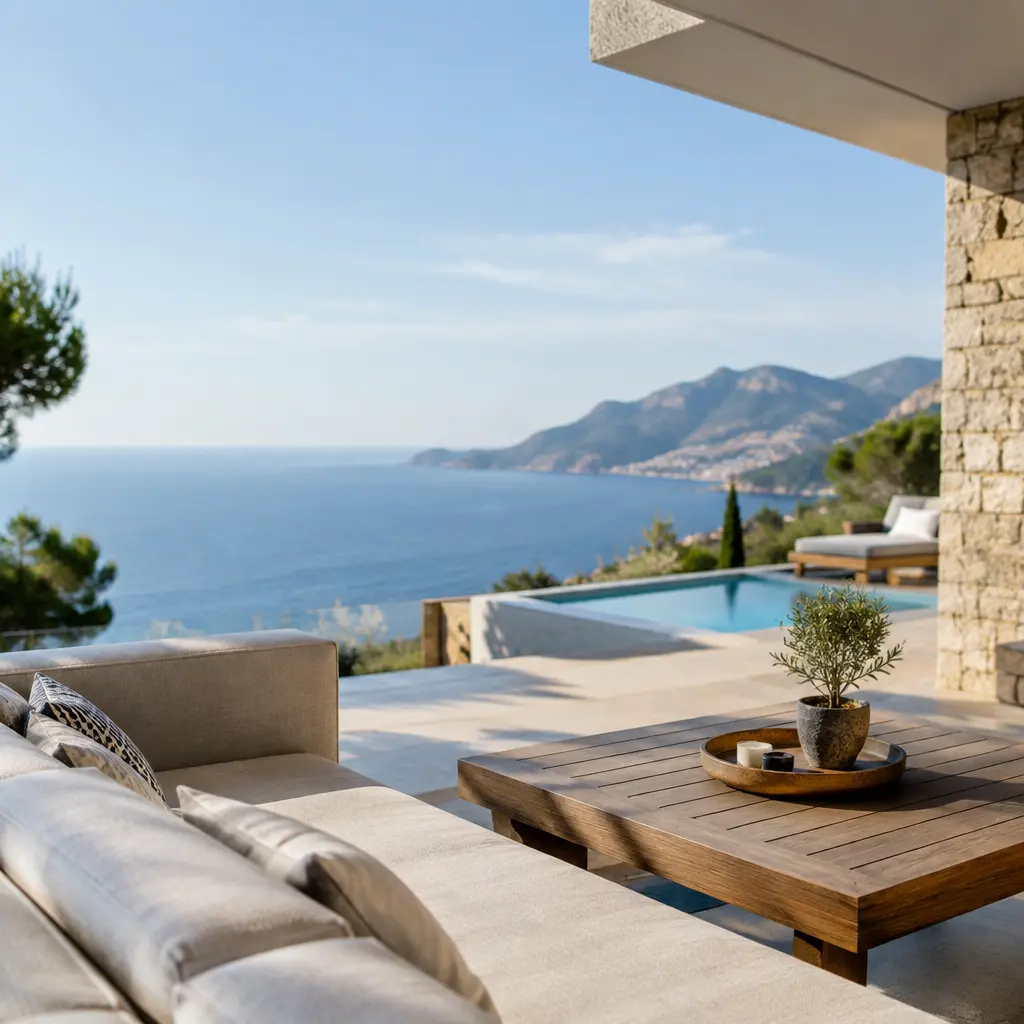
Belgian and French buyers regularly rank among the most active nationalities, drawn by the geographical proximity and a cost of living markedly lower than in France or Belgium. Working with a specialized agence immobilière Costa Blanca can streamline your acquisition process. The luxury market also benefits from a renewed architectural offer: contemporary villas with infinity pools, sea-view penthouses, gated residences with concierge services.
The Costa Blanca is one of the most sought-after property destinations in Europe. With its exceptional sunshine (around 2,850 hours of sunshine a year according to AEMET), modern infrastructure and the quality of life it offers, the region attracts retirees looking for a second home as much as seasoned investors. The luxury segment in particular has seen sustained demand and steadily rising prices since 2021.
Wherever you are buying from, this guide gives you a clear, practical picture of the market before you make your decision.
Why the Costa Blanca attracts luxury property buyers in 2026
In 2026, the Costa Blanca remains one of Spain’s most dynamic coastlines for property. Foreign demand carries great weight in transactions in several coastal municipalities of the Alicante province. Belgian and French buyers regularly rank among the most active nationalities, drawn by the geographical proximity and a cost of living markedly lower than in France or Belgium.
The luxury market also benefits from a renewed architectural offer: contemporary villas with infinity pools, sea-view penthouses, gated residences with concierge services. The value of these properties holds up well through economic cycles, which reassures long-term investors.
Our complete guide to buying a villa takes you step by step through the process of acquiring a high-end property suited to your profile and investment goals.
What is the difference between the northern and southern Costa Blanca for high-end property?
The north (Altea, Calpe, Jávea) attracts high-end buyers, often affluent Europeans, looking for architect-designed properties with sea views. Prices there are higher (average asking prices of around €3,570 to €4,120/m² in Calpe, Altea and Jávea, idealista 2026, and more for prestige properties) and the atmosphere more exclusive. The south (Torrevieja, Orihuela Costa) offers a more accessible market (average asking prices of around €2,550 to €2,990/m² in Torrevieja and Orihuela Costa, idealista 2026), with a large Belgian and Nordic community.
The flagship areas for high-end property: north vs south
In the north of the Costa Blanca, Altea stands out as the benchmark for architectural luxury. Its white-stone villas perched on the hillsides, with panoramic views over the Mediterranean, are among the most coveted. Calpe, with its famous Peñón de Ifach rock, attracts lovers of seafront penthouses and exceptional properties. Jávea, more discreet, appeals to a wealthy international clientele.
In the south, Orihuela Costa has a growing premium offer, particularly around the Las Colinas Golf and Villamartin developments. Residential complexes with hotel-style services are flourishing there. Torrevieja, more affordable, remains a popular gateway for French-speaking Belgian buyers looking for solid value for money with high-end features.
Benidorm holds a special position: often associated with mass tourism, it actually offers excellent upper-floor penthouses with open views over the bay, at prices that are still competitive for the luxury segment.
Price per m² by area: what you need to know before buying
The luxury market on the Costa Blanca is far from uniform. Differences between areas and between properties are significant. Here are some indicative benchmarks.
What are luxury property prices on the Costa Blanca in 2026?
Average asking prices (all property types, idealista, 2026) are around €4,120/m² in Jávea (June), €3,640/m² in Altea (mid-2026), €3,570/m² in Calpe (June), €2,990/m² in Orihuela Costa (January) and €2,550/m² in Torrevieja (May). Prestige villas with sea views and seafront penthouses sell well above these averages: ask us for current examples.
Prices depend heavily on the property’s condition, location, pool and finishes. A property in need of renovation can be bought for less, but involves renovation costs that must be estimated precisely.
Buying a luxury property in Spain as a non-resident: the key steps
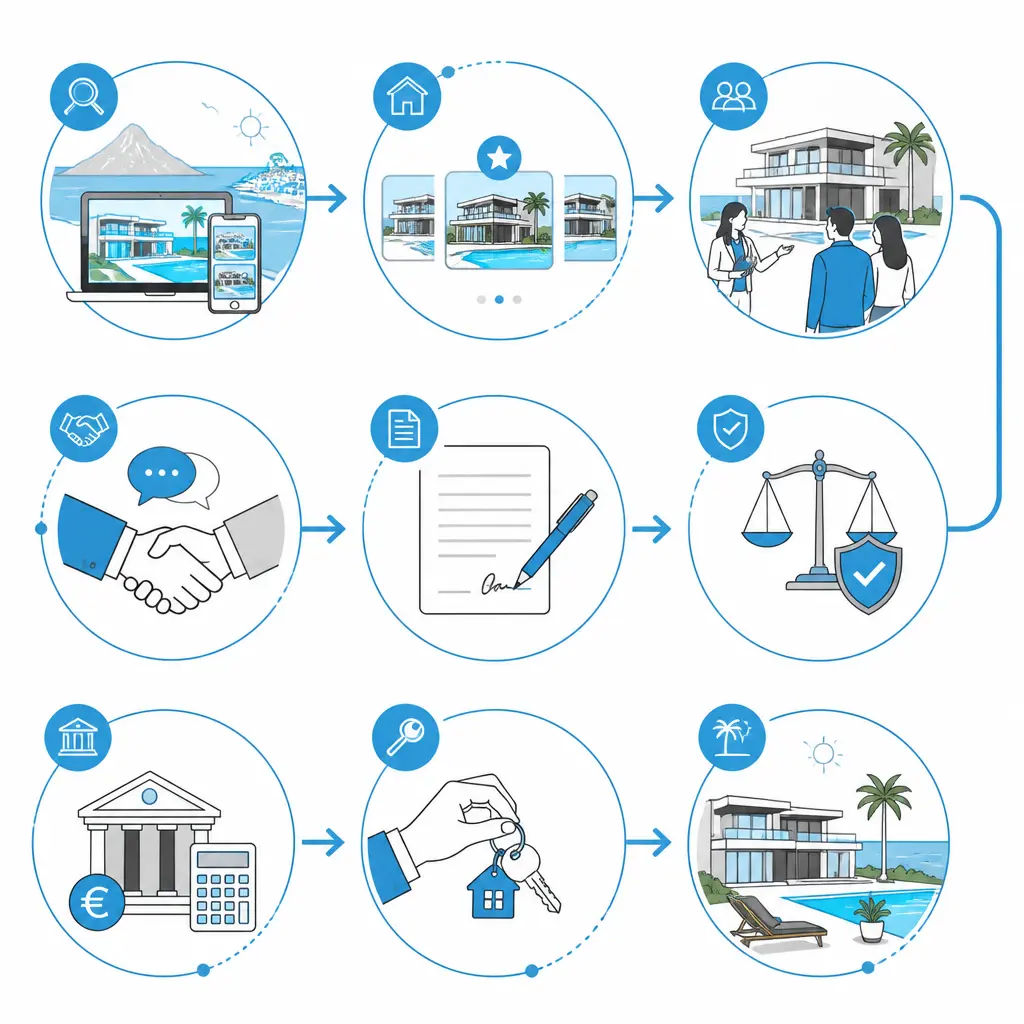
The property buying process in Spain is structured and secure, but it has specific features that every foreign buyer should know. At Maison Costa Blanca, we guide our clients through every step, from the first viewing to the handover of the keys.
See our complete guide to buying in Spain for a detailed overview of the whole process.
What are the steps to buy a luxury property in Spain as a non-resident?
First, you need to obtain your NIE (Número de Identidad de Extranjero), which is essential for any legal transaction in Spain. Next, open a Spanish bank account. Signing a preliminary contract (arras) secures the purchase with a 10% deposit. Signing before a notary completes the sale. The deed is then entered in the Land Registry (Registro de la Propiedad) to give you legal protection.
We always recommend using an independent lawyer for the legal checks on the property (charges, easements, planning). This step is non-negotiable in the luxury segment, where the financial stakes are high.
What costs should you plan for on top of the purchase price?
This is often the question that surprises international buyers discovering the Spanish market. The additional costs are real and should be built into your budget from the outset.
What costs should you budget for on top of the purchase price of a luxury property in Spain?
For a resale property, ITP (transfer tax) amounts to 9% of the price in the Valencian Community for deeds signed since 1 June 2026, and 11% when the value exceeds €1,000,000. For a new build, it is VAT (IVA) at 10% plus AJD tax (1.4% in the Valencian Community since 1 June 2026). Add notary and land registry fees (official sliding scales) and lawyer’s fees (around 1% + VAT); agency fees are usually paid by the seller. In total, budget around 10.5 to 13.5% of the purchase price for additional costs.
If you finance part of the purchase with a Spanish mortgage as a non-resident, Spanish banks generally lend up to 60 to 70% of the lower of the price and the appraised value. Rates vary depending on your profile and the bank chosen. A mortgage broker can help you compare the banks’ offers.
Why choose Maison Costa Blanca for your property project
Maison Costa Blanca is a Belgian company (La Louvière) working with Costa Blanca Sales, established since 2000 with an office in Villamartín. We recommend an independent law firm for the legal checks, guide you through the NIE and power of attorney paperwork, and provide after-sales support.
Our team is multilingual (French, Dutch, English and Spanish) and works on the ground every day on the southern Costa Blanca and in the Region of Murcia. We know the real transaction prices, the developing areas and the upcoming urban planning projects. It is this local knowledge that makes the difference for our clients.
We support our clients from the very first search to registration in the Land Registry. Every project is handled with the same rigour, whether it is a €250,000 apartment or a €1.5 million prestige villa.
Find out who we are and how we work before getting in touch. And if you would like to go further, talk to a local expert: a first, no-obligation conversation will help you define your project precisely.
- Prices vary widely by area and type of property: average asking prices range from around €2,550/m² in Torrevieja to €4,120/m² in Jávea (indicative, idealista, 2026), with prestige properties above these levels.
- The north (Altea, Calpe, Jávea) is more exclusive and more expensive; the south (Orihuela Costa, Torrevieja) offers attractive value for money and is very popular with Belgian buyers.
- Obtaining an NIE is the first mandatory step for any property purchase in Spain as a foreigner.
- Budget around 10.5 to 13.5% of the purchase price for additional costs (taxes, notary, land registry, lawyer).
- An independent lawyer is strongly recommended to check the property, especially in the luxury segment.
Planning a purchase on the Costa Blanca? Don’t let administrative or tax uncertainties hold back your decision. Our team, which speaks French, Dutch, English and Spanish and works with Costa Blanca Sales, active on the ground since 2000, is here to turn your project into reality. Contact our advisers today and enjoy a first, no-obligation conversation.
🧠 Quiz: test your knowledge
Which document is essential to buy a property in Spain as a foreigner? A) A translated and apostilled passport B) The NIE (Número de Identidad de Extranjero) C) A European residence permit
Show the answer
The correct answer is B) The NIE. This Spanish tax identification number is mandatory for any legal transaction in Spain, including buying property. Without an NIE, no transaction can be completed before a notary.
Related articles
- Country house on the Costa Blanca: the complete guide to buying well in 2026
- Apartments on the Costa Blanca: the complete guide to buying in 2026
- Villa in Spain on the Costa Blanca: the complete guide to buying in 2026
- New build vs resale property in Spain – Finding the best fit for your lifestyle and investment